

We are Redshift Labs. We’re AI experts. We’re redefining how businesses serve their customers. This page sets the stage for and delivers the vision for what websites should become in the 21st century.
Markets are conversations
There’s something happening to software that most people haven’t noticed yet, but once you see it, you can’t unsee it. We’re reaching the end of interfaces as we know them.
I don’t mean interfaces are disappearing. I mean the fundamental relationship between humans and software is changing from transactional to conversational, from stateless to stateful, from tools to teammates.
— Greg Isenberg
We are finally coming out of the dull doldrums of humans searching by hand, filtering, reading, skimming, overlooking, running multiple tabs and searches, going too fast, making mistakes, taking wrong turns, shooting and editing videos, filling out forms, and waiting for humans to reply by email.
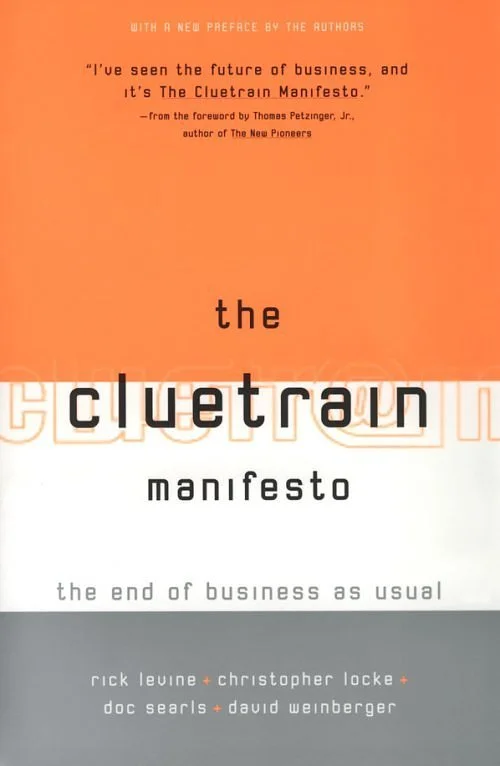
We’re finally entering the era I described in my book, Pull, from 2010. You can buy it on Amazon today, and I highly recommend the hardcover version for the best reading experience, though I understand many people would prefer the Kindle version.
We’re doing it differently than I envisioned, but the goal is still the same: give customers the ability to pull products and services, focus on the outcome, and streamline the intermediary processes. Markets are conversations, not linear processes. The goals keep changing as society moves forward. Let’s dig in.
Websites are dinosaurs
In 1994, I invented websites. Before that, there were pages and links. I wrote the first book on web design, which remains to this day Amazon’s longest-running #1 bestseller and was translated into 17 languages. Today, there are around 1 billion websites, and they are all past their prime. Websites are expensive to maintain, difficult to navigate, usually out of date, and the source of many arguments inside of companies. Intranets are just as bad — it’s difficult to find anything, and people are rarely incentivized to share information maximally.
Today, many companies are doing a tremendous amount of repetitive work by hand. We are used to it. We accept it as part of our jobs. But AI can do all that, and we should keep remembering to use AI first, rather than do it ourselves.
There are degrees of repetitive work. Today, we use databases and mail-merge to send out thousands of customized emails, but we still cut and paste details from one document to another and spend a lot of time getting the details right.
Websites are a great example. Today, we use SquareSpace, WordPress, or Wix to build a website. The advantage is that the system can present a dynamic site to whoever is visiting, whether on a desktop, a tablet, or a phone. You’re reading a SquareSpace site right now. What a pain these platforms are! There are always compromises, workarounds, and “custom code” to get what you want. Ecosystems of consultants surround these platforms because they are so arcane and temperamental. They are barely a step up from hand-coding HTML.
As I was creating this page, I made some mistake and put all the sections into the footer rather than the body of the page. Half an hour later, I realized the problem and spent another half an hour cutting and pasting the sections out of the footer into the header by hand. How 2015 is that?

Apps are traps
I’ve been saying this for 25 years, even before mobile apps were a thing. Apps are not ecosystems, they are silos. Every company would love to have a lot of customers using its app, because it’s so hard to switch apps, establish an account, do KYC, and get set up properly. Once you do all that, it’s a barrier to switching vendors.
But.
Apps are expensive to maintain. If you have a website and a mobile app, you now have three platforms to keep up-to-date, not to mention social media, blogs, and other content. The more channels you have, the more IT people you need. Apps are notorious for using up a lot of engineering and maintenance. There are frequent OS updates, which require frequent responses on both IOS and Android. So the tech team grows and grows.
Plus, most customers don’t want an app for every vendor. They would rather have flexibility. They would rather have a personal data locker, but that doesn’t look like it’s going to happen. Think of it in a hierarchy:
Website
Tab open all the time
App
It takes a lot to get a consumer to download and commit to an app. They may do it for their bank, but they are unlikely to do it for your mattress company or your coaching service.
If you want to do it all using a website, you’re again stuck with Wix, SquareSpace, and WordPress. This is the world of 2020, not the world of 2030.
Now everyone is vibecoding apps, but apps are not the right solution for most problems. What can we do instead of apps?
Services.
If companies provide services, then users/consumers can mash them up and get exactly what they want. Apps are too limiting. Think of all the communication/social apps that have all their own infrastructure, and you have to recreate your social graph on each one over and over again. Think of all the forms you have to fill out over and over.
A digital service economy scales without all the overhead and marketing of apps. Whether you provide legal advice, heart surgery, autobody work, or package shipping, you want your services to fit into the customer’s ecosystem, rather than the other way around. Once we get out of apps the economy will really start to accelerate.

The Agentic Commerce White Paper
The problem
You’re making chili at home and you need a can opener. You can’t snap your fingers and get a can opener. In the best case, you go to Amazon.com and you look at a minimum of 15 can openers before you randomly decide on one, based on the star rating, knowing full well that half of all star ratings and reviews are spam. Then you wait for the can opener to arrive.
In the agentic future, you don’t ask for a can opener. You ask for a bowl of chili. It knows you. It knows what’s in your fridge and your cupboard. It knows you love to cook, that you have plenty of time this afternoon, and that your can opener died last week. It also knows your neighbor is a friend and you have nice conversations, so it talks with your neighbor’s agent, asks if she has a can opener she can lend you, learns that she is home, and two minutes later, your neighbor knocks on your door and lets you open the can of beans while you have a nice chat. Meanwhile, your agent orders a new can opener and everything you need for making chili next time, all of which arrives the next day.
This future is not that far away.
Architecture Overview
The architecture has five layers:
Company data layer
Company agent
Personal Data Locker
World of Offers
Transaction engine
Together, these layers create a semantic commerce stack that can operate across websites, MCP servers, APIs, and other agent-compatible surfaces. The point is not to replace every existing system immediately, but to create a new interface layer that agents can use natively.
Company Data Layer
The company data layer takes the business’s existing information and formats it for web, documents, internal systems, and machine use. It ingests product data, service catalogs, policies, pricing, availability, operating rules, FAQs, support content, CRM state, and other internal knowledge. It then normalizes that data into a semantic model that is consistent, queryable, and actionable.
This layer should be exposed through MCP servers and APIs so agents can retrieve company truth without scraping pages or inferring meaning from HTML. It becomes the company’s machine-readable source of truth for both external and internal use.
Company Agent
The company agent is the business’s representative in the agentic economy. It answers questions, clarifies ambiguity, recommends next steps, and performs actions on behalf of the company when appropriate. It should work for any human or agent that wants information from the company in any form.
This is more than a chatbot. It is a policy-aware, data-connected service layer that can operate across sales, support, operations, and transaction workflows. It can live on a website, in partner environments, or behind APIs and MCP-compatible tools.
The Personal Data Locker
Today’s marketing stack involves guessing what people want, targeting groups, and missing 98 percent of the time. The Internet marketing industry is worth more than $1 trillion worldwide, and 98 percent of it is wasted on people who aren’t looking for the offer or brand presented. There is a huge opportunity to reduce waste in this industry by switching to semantic matching.
The Personal Data Locker contains the “haves” and “wants” of individuals, groups, and organizations. It stores the user’s preferences, constraints, history, timing, budget, and decision rules so the user does not have to repeat themselves every time they interact with a company or agent. It gives the user’s agent a durable model of what the person wants and how they make decisions.
Wants are not just search terms. They are evolving preference structures, and the agent needs a place to store them in a reusable, machine-readable way. Once a user’s wants are explicit, the system can match them against offers with much higher precision.
Learn more on the Personal Data Locker page.
Voice agents
Voice agents will be everywhere. They will recognize you and remember what you did last time. You may not want to wear AI glasses or an AI pin or an AI necklace. You may just want earbuds that can talk to you the way J.A.R.V.I.S. does. I believe the J.A.R.V.I.S. interface will be how most people interact with the digital world when they are out away from the office.
An AI agent that can actually make the sale by voice, gesture, click, or API will be the foundation of the agentic economy. It won’t use traditional marketing tactics to get attention, create false urgency, use funnels or prizes or attention-getting stunts. It will provide the basis for apples-to-apples comparison and the cost/benefit calculation that each buyer’s agent will make on behalf of its humans. This gives the company a practical entry point into the wants/offers/transaction architecture without requiring a full system rebuild. See our sales agent demo for more.
Passive commerce
You may be in the market for something, but that something isn’t out there. It could be a job, a car, a cruise package, or your next collectible wristwatch. Similarly, you may have something that really isn’t for sale, but it could be for the right price. Why go hunting for it? Why not list your haves and your wants and expose them to the agentic web?
Things you have come with digital birth certificates. Everything you own has a digital birth certificate. It not only details its manufacture but also use, service, movement, and previous ownership history. You just happen to be the current owner. Your house is full of things you own — they all sit inside your home’s digital data locker, so you can see at a glance everything in your home, including where all the wires are inside the walls and all the repairs and appraisals and previous owners, etc.
Things you want are digital files of things you own that you just don’t own yet. That’s a semantic description of what you’re looking for. It includes ranges of everything you would find acceptable in fulfilling this need — whether it’s a vacation, a wedding, or a rental car.
With those in place, the magic happens: your agents are always on the lookout for things you want (or may want), and they are always talking with agents who may have an offer for something you have. You may be perfectly happy with your job, but without going to a single job site, your agent may bring you an opportunity you’re willing to look at.
This is passive commerce. It’s the opposite of the hunt-and-seek routines we have today, and it eliminates 98 percent of the time spent guessing, looking, comparing, and trying to find products and buyers you spend today.
The World of Offers
The World of Offers is the supply layer. It is a global registry where merchants and service providers publish structured offers that agents can pull from rather than search for manually. Each offer can include price, availability, delivery terms, constraints, substitutions, guarantees, and other actionable conditions.
The critical shift is that offers are no longer trapped inside websites or CMSs. They become first-class objects that can travel across channels, be compared by agents, and be matched against a specific want in real time. This is the missing supply-side counterpart to the Personal Data Locker.
A separate white paper for the World of Offers is available and covers the supply-side registry in detail.
The Transaction Engine
The transaction engine settles the deal. There is no need for each company to re-invent this wheel. Today, we have Shopify, WooCommerce, Stripe. Tomorrow, we’ll have a web-wide transaction engine that can combine orders from many sources and get the buyer what he/she wants according to a deal that combines all the offers and all the terms involved for all parties. It handles authorization, payment, receipts, order state, delivery logic, settlement, and post-purchase commitments, with or without humans in the loop depending on policy and risk. It supports both autonomous commerce and approval-based commerce.
This layer is essential, because matching alone is not commerce. A system that can only recommend is incomplete; a system that can settle becomes economically real. The transaction engine is what makes the architecture operational rather than conceptual.
Getting Started
The fastest way to deploy the architecture is to begin with an AI sales agent. This agent becomes the company’s front door: it reads the structured company data, answers questions, qualifies intent, routes requests, and converts interest into action. It creates an immediate commercial win while laying the foundation for the broader stack.
The AI sales agent should do three things well:
Capture inbound intent from the website and other surfaces.
Qualify the request and determine whether the visitor is a buyer, partner, or support case.
Make the sale. While other systems schedule a call to talk with a human, AI agents are now capable of making the sale and consumating the transaction. This will be normal by 2018. We want to bring it on now.
See the little sales agents in the websites below?
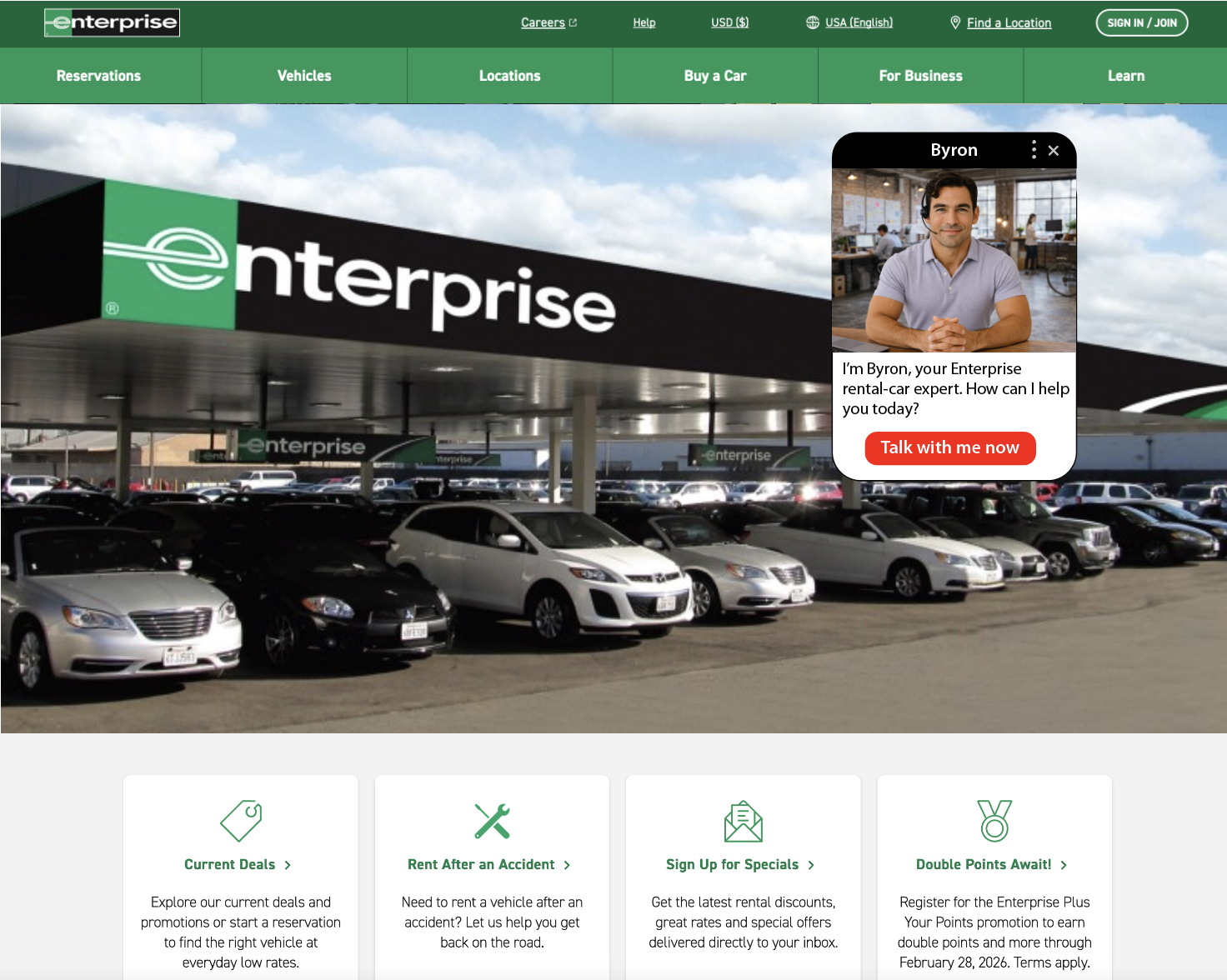

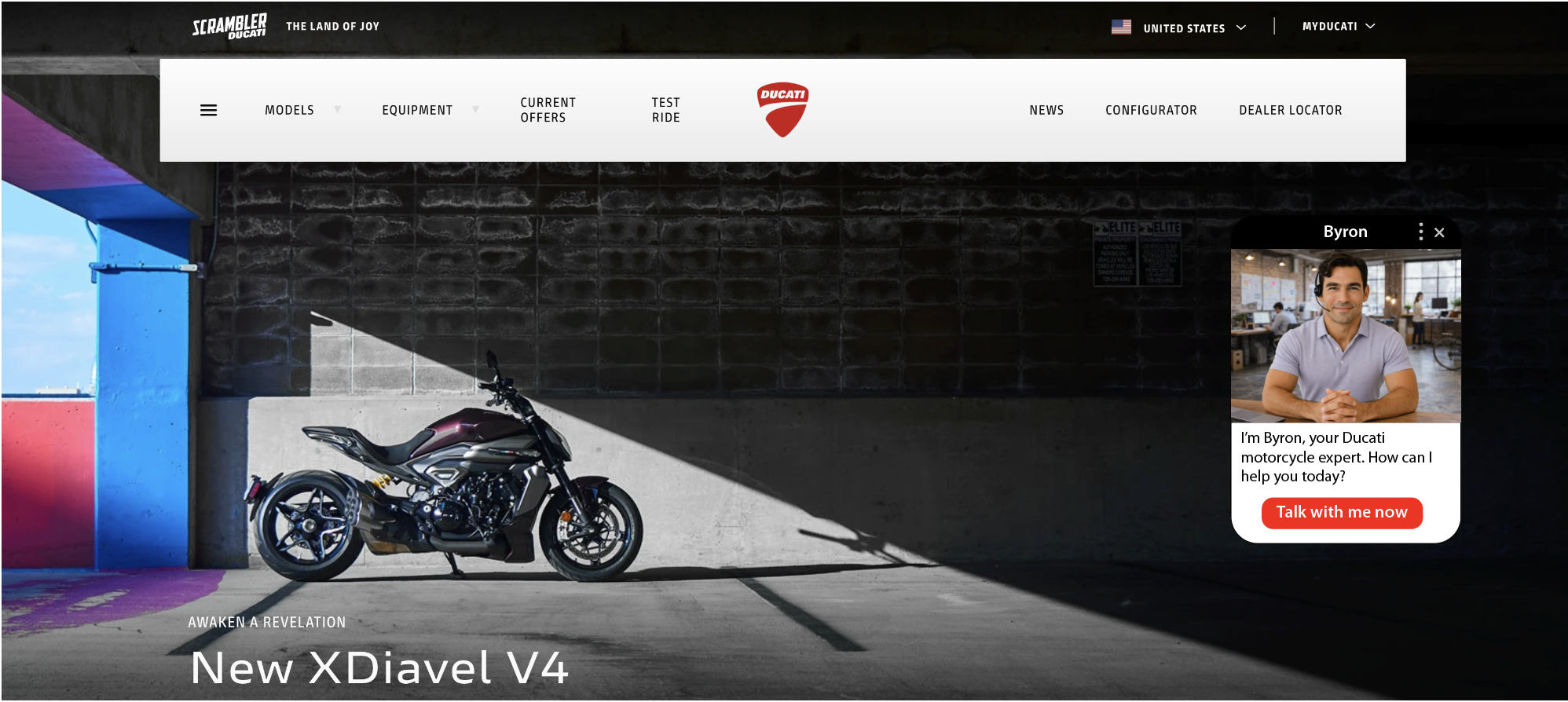
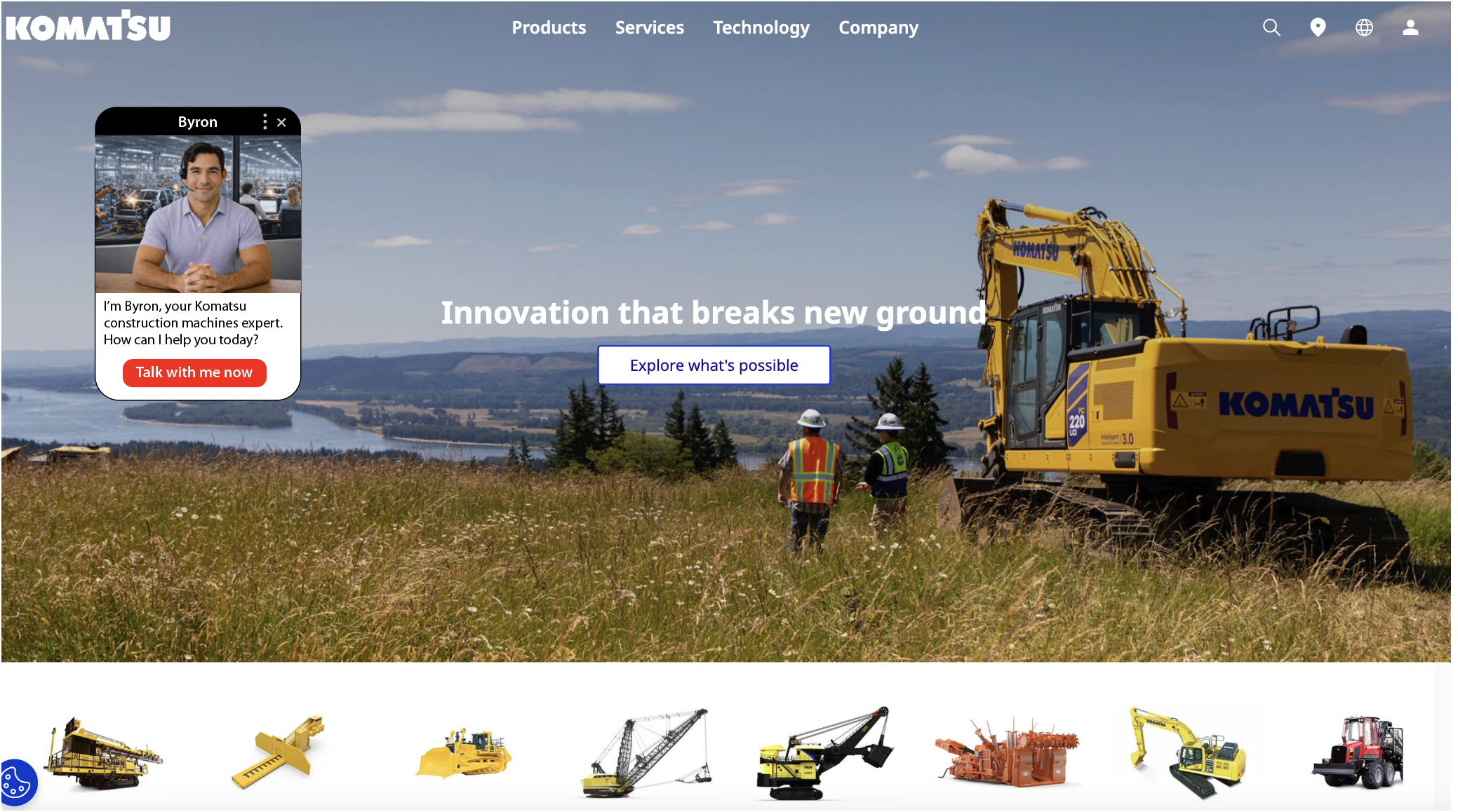
Those agents start as talking sales agents that can give people information and sell them the product or service they are looking for. But over time, those agents become the website. They take all the company’s information and resources and serve them to whoever is asking, whether it’s a human or a bot. Eventually, the website goes away, and this agent can easily serve images, videos, set up live video calls, events, handle customer-service requests, interface with the press, provide updated documents and data, and much more.
In this future, the company is a collection of data, intelligence, and action. Anyone or anybot coming to the website can just have a conversation and get what he/she is looking for, whether it’s a job applicant, an investor, a lawyer, or a prospective customer.
No more websites. No more funnels. No more navigation. Just answers and action.
Data Flow
The operational flow is straightforward:
Company systems feed data into the normalization layer.
The normalization layer converts that data into structured entities and semantic services. Companies add their offers to the World of Offers server ecosystem.
The user’s agent consults the Personal Data Locker to understand wants and constraints.
The company agent exposes data and resources to humans and agents, initially through sales but over time by answering questions, providing services, and connecting agents and humans to the information they are looking for. The company agent can provide buyers’ agents with semantic data packages and offers that go directly into the customer’s dashboard for comparison.
The user sees several offers and ranks them according to his/her values. The agent helps configure a solution.
The transaction engine completes the deal.
This creates a closed loop from intent to fulfillment. It also makes each layer independently useful while increasing the value of the whole system as adoption grows.
Summary
This is a new world, and it’s already getting started. The web is moving from pages to protocols, from navigation to matching, and from persuasion to cost/benefit analysis. This architecture gives companies a way to participate in that transition without discarding their existing data or rebuilding everything at once. The result is a new commerce layer where companies can be understood, discovered, and transacted with directly by agents acting on behalf of humans.
A separate white paper for the World of Offers is available and covers the supply-side registry in detail.
If you’re interested to learn more about this or help us get it funded, get in touch.